In the smart manufacturing and precision machining industries, CNC machines are the core production equipment. As the central interface for human-machine interaction, the industrial LCD screen directly determines the operation experience, system stability, and lifespan of the machine.
Many machinery manufacturers encounter severe issues during R&D or equipment upgrades—such as short display lifespans, component stockouts without replacement options, and poor visibility under harsh factory lighting—all of which lead to increasing maintenance costs.
This guide provides a professional analysis of the selection logic for CNC machine industrial LCD displays, helping manufacturers quickly find the correct industrial-grade LCD panels.
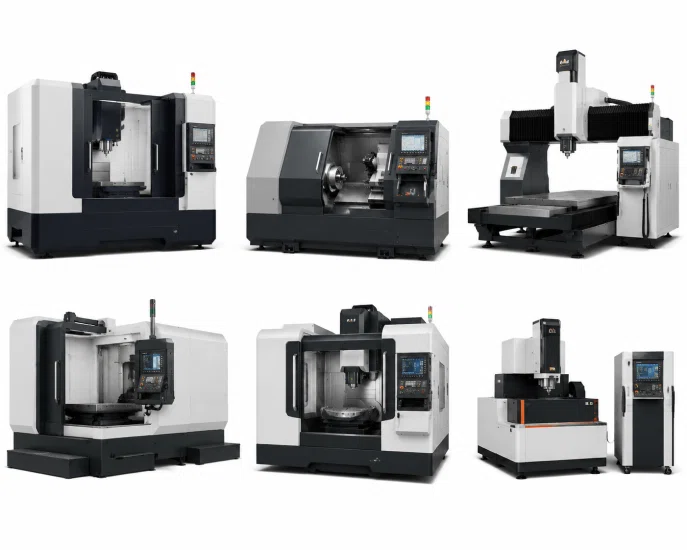
A CNC machine is an automated industrial equipment that uses digital programming to perform high-precision metal cutting, drilling, milling, and grinding. CNC machines offer higher accuracy, advanced automation, and 7×24H continuous manufacturing capabilities. They are widely used in mold making, automotive parts, hardware machining, and aerospace sectors.
Common equipment types include Vertical Machining Centers (VMC), CNC Lathes, Gantry Machining Centers, and Drilling & Tapping Centers. Different machine models have unique control cabinet structures, installation spaces, and working environments. Therefore, their requirements for industrial LCD screen size, performance, and mechanical structure vary significantly.
• Choosing Cheap Commercial or Refurbished Screens: These lack vibration and EMI resistance. They quickly develop black screens or flickering issues, leading to endless after-sales complaints.
• Selecting Non-Standard LCD Panels: Sourcing uncommon models from obscure suppliers makes it incredibly easy to face sudden EOL (End-of-Life) stockouts, leaving you with no replacement parts.
• Ignoring Real Work conditions When Picking Brightness: Using an ultra-high brightness screen in a dim workshop accelerates panel aging, while using a low-brightness screen in a well-lit factory makes the data unreadable, hurting operations.
• Neglecting EMI Protection: Installing a screen without verifying its EMI rating often results in severe screen waving once the motor starts up, rendering the system unusable.
• Failing to Verify Lead Times in Advance: Facing component shortages right during the batch production or product launch phase delays your machine's time-to-market and delivery schedule.
Based on years of experience in industrial display supply chains, we highly recommend that equipment manufacturers strictly evaluate the following core specifications during procurement:
• CNC machines generate continuous structural vibration due to high-speed spindle rotation and surrounding heavy-duty equipment.
• Industrial LCD screens feature ruggedized LCD modules and reinforced internal structures to withstand persistent workshop vibrations. This prevents critical failures like loose wire harness connections, screen flickering, and black screens on startup.
• CNC cabinets have high-power components like motors, frequency inverters, and transformers, which emit strong electromagnetic radiation.
• True industrial LCD panels are designed with optimized circuit routing and shielding structures to resist EMI, ensuring a steady display image free of screen waviness or signal ripples.
• Manufacturing workshop environments usually have high ambient light levels.
• Premium industrial LCD displays come standard with a brightness of 400 to 1000 nits, ensuring excellent visibility across most factory floor conditions.
• The backlight module is the main wearable component of an LCD screen. Since CNC machines typically have a service life of 8 to 10 years, display longevity is vital.
• Industrial-grade LCD screens must offer a WLED backlight lifespan of over 50,000 hours, drastically cutting down after-sales failure rates and future replacement costs.
• Most manufacturing plants operate on two-shift or three-shift schedules, keeping CNC machines running non-stop.
• The chosen industrial LCD screen must be built with circuits, backlights, and driver ICs engineered to support 7×24h uninterrupted operation.
• CNC machinery product cycles are long, and equipment iterations are slow.
• Manufacturers should prioritize standard mass-production models from Tier-1 brands like AUO, BOE, and Innolux etc. This ensures a stable supply for at least 5 years, guaranteeing that replacement components remain available throughout the machine's entire lifecycle.
• Modern CNC interfaces rely heavily on touch controls. And metal chips and cutting fluid splashes can easily scratch the surface. Most manufacturers require TFT LCD panels bonded with Resistive/Capacitive (PCAP) touch screens or protective cover glass.
• CNC control panels are usually fixed to the machine frame at a set angle. Selecting an industrial panel with IPS display technology provides wide viewing angles, keeping the display clear for operators standing in different positions.
• High contrast ratios also ensure intricate graphical data, like toolpaths and coordinates, remains perfectly legible.
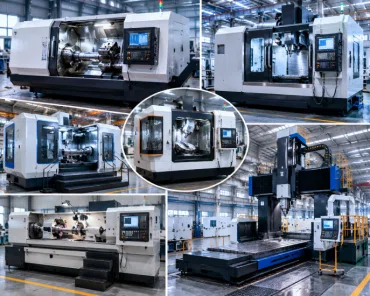
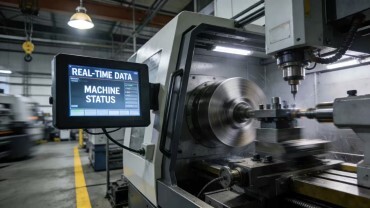
An industrial LCD screen is the HMI windo of a CNC machine. It is a core hardware component, not just a simple tool for displaying images: Firstly---Operation Control: It handles critical tasks like program editing, parameter adjustment, and machining data input. Secondly---Real-Time Monitoring: It displays spindle speed, feed rate, equipment operating status, and error/alarm codes. Lastly---Line Troubleshooting: It allows operators to monitor the manufacturing status in real time and troubleshoot faults instantly to ensure smooth assembly line production. The stability of the LCD panel directly dictates the operational uptime of the CNC machine.
Selecting an LCD screen for CNC machines is about more than just checking specs; it is about choosing quality, stability, and long-term service support.
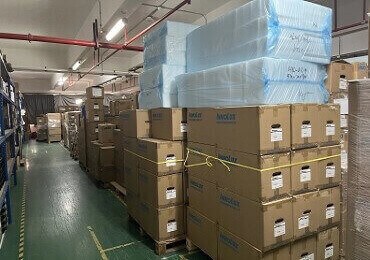
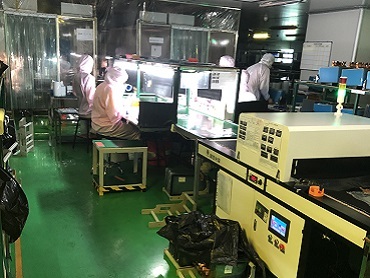
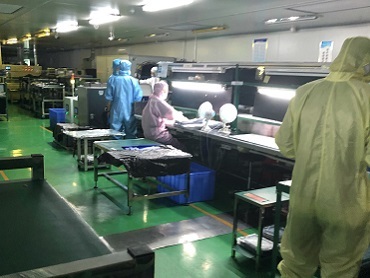
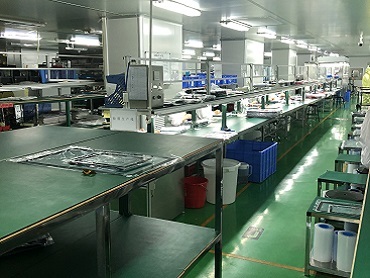
Hengxinda has been deeply rooted in the industrial LCD display market for years. We specialize in supplying original industrial LCD panels from premier brands like AUO, Innolux, BOE, and IVO. Having delivered thousands of display solutions for CNC machinery, industrial computers, and automation hardware, we maintain sufficient stock of mainstream TFT LCD panels to guarantee a stable, long-term supply.
What We Offer to CNC Equipment Manufacturers
♦ R&D Samples & Technical Support: Sample sourcing for new product development and engineering-level parameter alignment.
♦ Custom Bonding Services: Custom bonding of resistive/capacitive touch screens and protective cover glass.
♦ One-Stop Supply Chain Security: Stable bulk supply and reliable long-term availability of after-sales replacement components.
From early-stage selection and sample testing to final mass production and lifecycle support, Hengxinda solves your industrial display integration challenges completely. Contact our engineering team today for a cost-effective quote!
Recommend Reading
• How to Choose the Right LCD Display Panel for Industrial Control Equipment?
• How to Choose Industrial TFT LCD Displays for Industrial Automation Display Equipment?
• Industrial TFT LCD Displays by Application: Choosing the Right LCD Panel for Industrial Factory
Please enter your information and provide your contact information, we will contact you as soon as possible.
Please enter your name and email address to start the download.