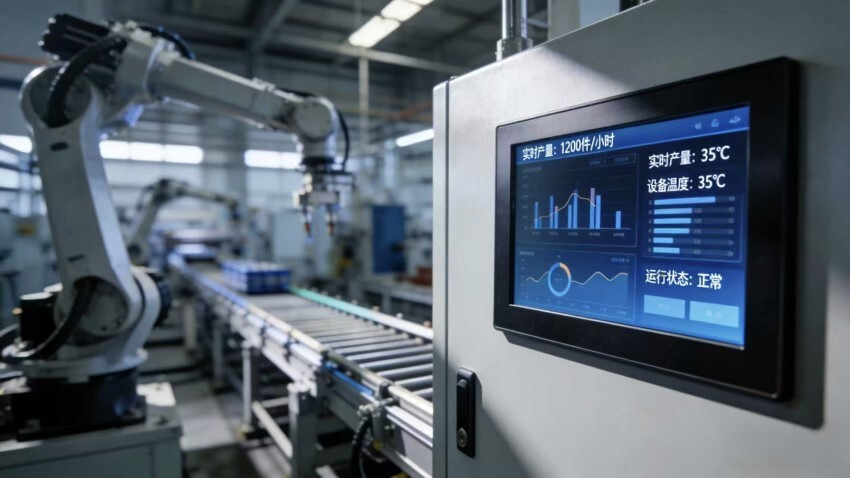
In modern industrial automation, smart manufacturing, and control systems, industrial TFT LCD displays play a vital role as the core human-machine interface (HMI). Their performance directly impacts equipment efficiency, system stability, and long-term operational reliability. Unlike consumer-grade displays used in TVs or smartphones, industrial LCD panels are specifically designed to operate in harsh environments, including extreme temperatures, high humidity, vibration, and continuous 24/7 operation. Therefore, selecting the right industrial LCD displays is a critical step in industrial equipment design and system integration. This article provides a comprehensive guide to choosing the right industrial LCD display by covering definitions, industrial environment challenges, key selection parameters, and practical considerations.
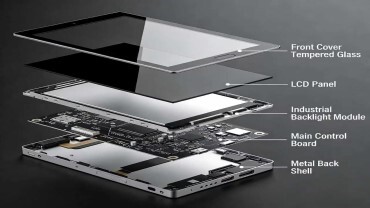
An industrial TFT LCD display is a display device engineered specifically for industrial applications. Its primary function is to convert electronic signals into stable, readable visual information for data monitoring, system control, and user interaction. Compared with consumer LCD displays, industrial LCD displays prioritize long-term stability, durability, and adaptability to complex operating conditions. Industrial LCD panels typically use industrial-grade components, undergo strict environmental testing, and support customization options such as screen size, brightness, mounting method, interface type, and touch technology—capabilities that consumer LCD displays cannot reliably provide.
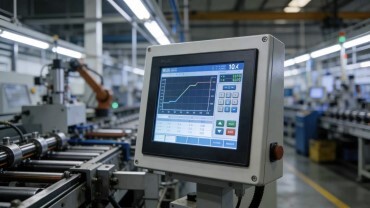
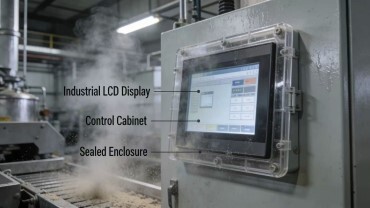
Understanding the industrial operating environment is essential for selecting the appropriate LCD panel. The main challenges include:
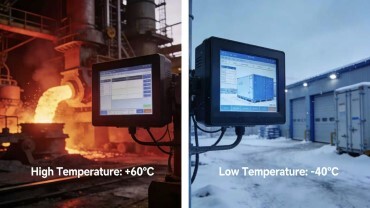
Industrial environments often experience wide temperature and humidity fluctuations:
♦ High-temperature environments such as metallurgy and chemical plants may exceed 40°C
♦ Cold-chain logistics and outdoor applications may drop below -20°C, or even -40°C
♦ Food processing and pharmaceutical facilities often have humidity levels above 85%
As a result, industrial TFT LCD displays must support wide operating temperature ranges and offer excellent resistance to moisture and dust.
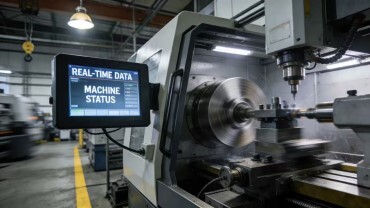
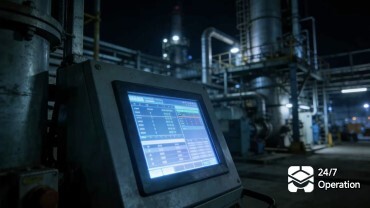
Most industrial systems require 24/7 continuous operation, with annual operating times exceeding 8,000 hours. Industrial TFT LCD monitors are typically designed for a lifespan of 30,000 hours or more.
This places high demands on component reliability, thermal management, and backlight stability. Consumer-grade LCD displays are generally not suitable for such long-term use.
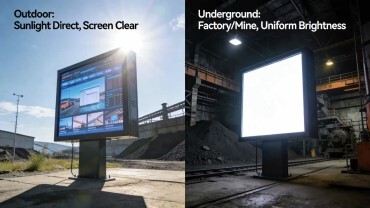
Industrial lighting environments vary significantly:
♦ Outdoor equipment is exposed to direct sunlight
♦ Warehouses, tunnels, and mines often have low ambient light
For high-light environments,LCD panels must offer high brightness, high contrast ratios, and anti-glare treatments to ensure readability under all conditions.
Machinery and industrial equipment generate continuous vibration and mechanical shock, which can loosen or damage internal components. In addition, high-power industrial devices produce electromagnetic interference (EMI).
Industrial LCD displays must provide strong anti-vibration performance and comply with EMC standards to ensure stable operation without display distortion or signal interference.
When choosing an industrial LCD display, the following technical parameters should be carefully evaluated:
Industrial LCD displays are available in sizes ranging from 3.5 inches to over 85 inches:
♦ Small sizes are ideal for control panels and embedded systems
♦ Large displays are suitable for monitoring centers and information terminals
Resolution options range from VGA to 4K. High-resolution displays are recommended for detailed images and complex data visualization, while lower resolutions may reduce costs for simple data display applications.
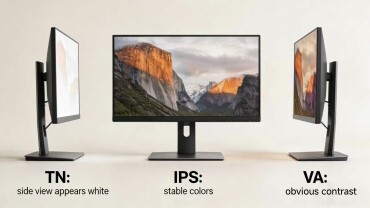
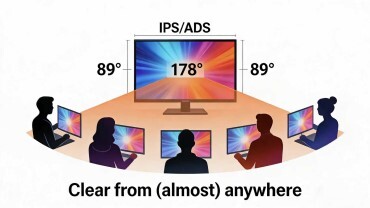
Different panel technologies offer different performance characteristics:
♦ TN panels: Fast response time, low cost, narrow viewing angles
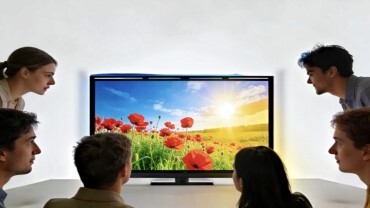
♦ IPS panels: Wide viewing angles (up to 178°), accurate color reproduction
♦ VA panels: High contrast ratios, balanced performance
The choice depends on viewing angle requirements, color accuracy needs, and budget constraints.
♦ Multi-user or non-front viewing: IPS or VA panels are recommended
♦ Single-user, front-facing operation: TN panels are often sufficient
Response time affects motion clarity:
♦ Dynamic content or video monitoring: ≤ 5 ms
♦ Static data display: ≤ 10 ms
Brightness is measured in cd/m²:
♦ Indoor environments: 200–500 cd/m²
♦ High ambient light: ≥800 cd/m²
♦ Outdoor high-brightness displays: 1,000 cd/m² or higher
Industrial LCD displays should meet appropriate IP protection standards:
♦ Indoor use: IP54
♦ Dusty or humid environments: IP65 or higher
♦ Outdoor wash-down applications: IP67 / IP68
Tempered glass may be added for scratch and impact resistance.
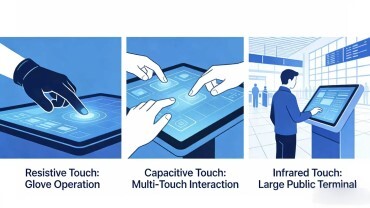
If touch functionality is required, common options include:
♦ Resistive touch: Works with gloves, high durability
♦ Capacitive touch: High precision, multi-touch support
♦ Infrared touch: Suitable for large screens and outdoor use
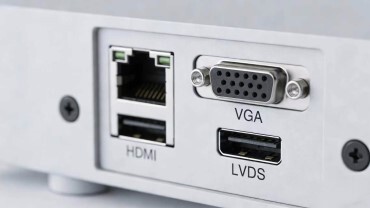
Common interfaces include VGA, DVI, HDMI, and LVDS. The selected interface should match the control system and allow for future expansion.
Screen size, resolution, and viewing distance must be properly matched:
♦ 5–10 inch: 0.3–1 m
♦ 12–24 inch: 1–2 m
♦ 32 inch and above: 2–5 m
Higher resolutions allow shorter viewing distances without loss of clarity.
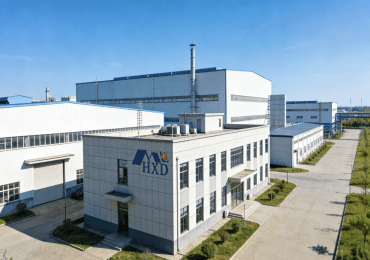
Zhengzhou Hengxinda Technology Co., Ltd. has been deeply engaged in the industrial TFT LCD display industry for 13 years, committed to providing stable, reliable industrial LCD display solutions that are well suited for complex and demanding industrial environments worldwide. We understand that industrial applications require more than just basic display functionality—long-term stable operation under harsh conditions is critical.
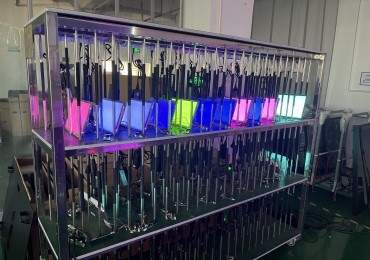
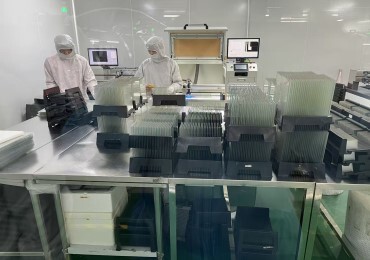
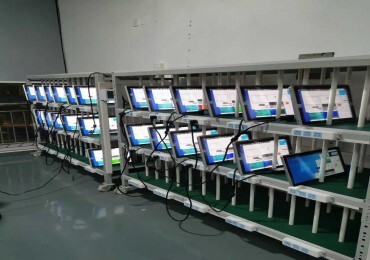
HXD industrial LCD displays are built with industrial-grade core components, ensuring reliable performance in wide temperature ranges, high-humidity conditions, strong vibration environments, and complex electromagnetic surroundings. Our products are widely used in industrial automation, intelligent equipment, outdoor devices, and other challenging applications. Every display undergoes strict testing before delivery to ensure consistent quality and dependable performance.
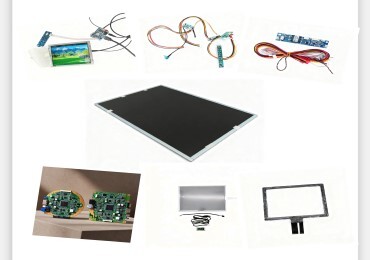
In terms of customization, HXD offers flexible, multi-dimensional customization services based on specific project requirements. These include screen size, brightness, resolution, touch technology, interface options, and mechanical mounting solutions. This allows our displays to integrate seamlessly with customers’ systems while reducing integration risks and overall development costs.
We don’t just supply products—we strive to be a trusted long-term partner in the industrial LCD display field.
Please enter your information and provide your contact information, we will contact you as soon as possible.
Please enter your name and email address to start the download.